

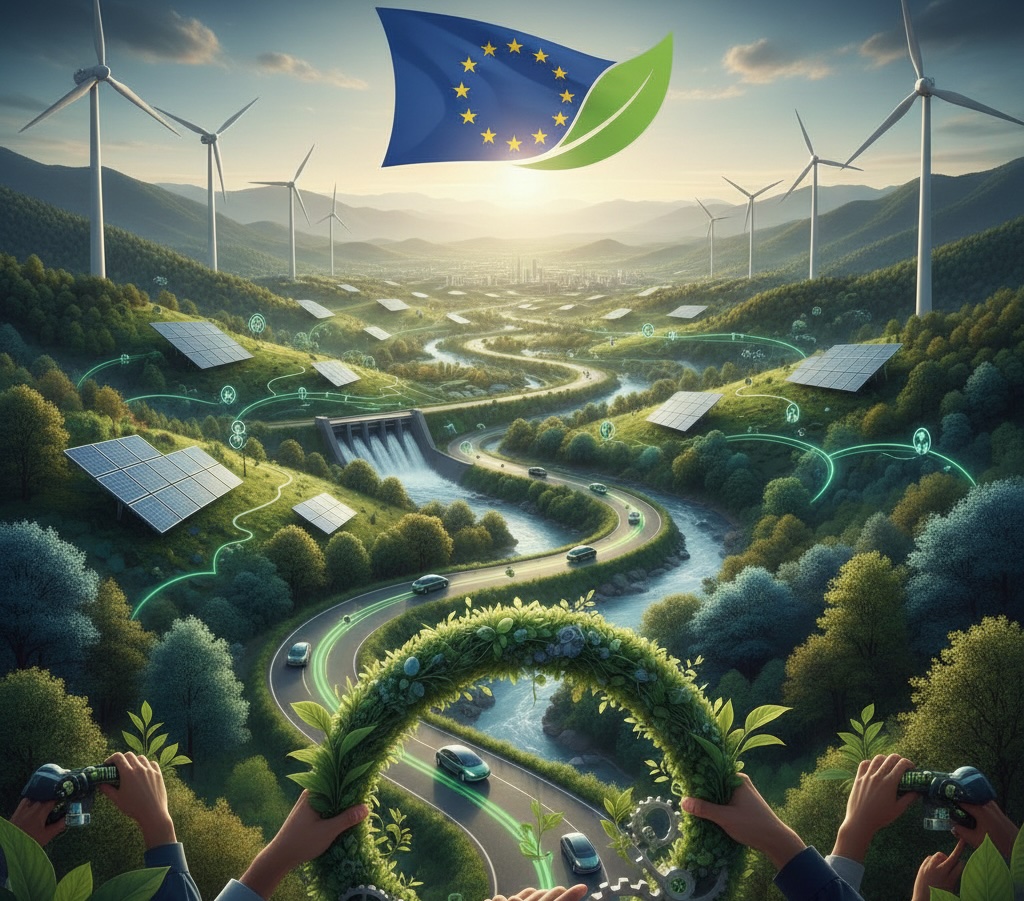
The EU Green Deal: A Roadmap for Green Transformation
The European Green Deal, announced by the European Union in 2019, is an ambitious and comprehensive growth strategy that forms the continent's response to environmental and climate-related challenges. Its primary objective is to make Europe the world’s first climate-neutral continent by 2050 and to decouple economic growth from resource use.
Main Objectives and Key Areas
The Green Deal encompasses a series of policies and legislative measures aimed at transforming all sectors of the EU. The most critical targets include:
Climate Neutrality: Achieving net-zero greenhouse gas emissions by 2050.
Emission Reduction: Reducing net greenhouse gas emissions by at least 55% by 2030 compared to 1990 levels (the "Fit for 55" package).
Protecting Biodiversity: Halting and reversing the loss of biodiversity.
Zero Pollution: Aiming for zero pollution in air, water, and soil.
To achieve these goals, the Deal focuses on key areas such as clean energy, sustainable industry, the circular economy, energy efficiency in buildings, sustainable food systems (the "Farm to Fork" strategy), and smart mobility.
Mechanisms and Financing
The Green Deal is not merely an environmental program; it is the foundation of a new economic model. Its implementation is supported by robust legal frameworks:
EU Climate Law: Makes the 2050 climate-neutrality target legally binding.
Carbon Border Adjustment Mechanism (CBAM): Designed to prevent "carbon leakage" by imposing a levy on carbon-intensive products imported into the EU. This aims to encourage producers outside the EU to comply with environmental standards.
Financing: Through tools like the European Green Deal Investment Plan and the Just Transition Mechanism, the EU aims to provide support to regions and sectors that may be economically vulnerable during the transition process.
Türkiye and the Green Deal
For Türkiye, a major trading partner of the EU, the Green Deal presents both a challenge and an opportunity. With the implementation of the Carbon Border Adjustment Mechanism (CBAM), it has become mandatory for Turkish industry to decarbonize production processes to maintain exports to the EU. This situation serves as a catalyst for accelerating investments in green transformation and energy efficiency within Türkiye.
In conclusion, the Green Deal represents a radical and systemic change shaping Europe's future competitiveness.